
Wrinkle Relaxers
Botox, Dysport, Daxxify, & Xeomin in Pearland, TX
Several neurotoxin options are available, including Botox®, Daxxify®, Dysport®, and Xeomin®. Each works in a similar way but has unique characteristics that may make one a better choice depending on your treatment goals, anatomy, and desired longevity. During your consultation, our experienced providers will recommend the product that is best suited for you.
Botox®
The most recognized name in wrinkle relaxers, Botox temporarily relaxes targeted facial muscles to soften fine lines and wrinkles. Known for its reliable, natural-looking results, Botox remains a popular choice for facial rejuvenation.
Daxxify®
Daxxify is an innovative, peptide-formulated wrinkle relaxer designed to deliver smooth, natural-looking results. Known for its longer-lasting effects, Daxxify is an excellent option for patients looking to extend the time between treatments.
Dysport®
Dysport is a fast-acting wrinkle relaxer that helps soften expression lines while maintaining a refreshed, natural appearance. Its formulation allows for effective treatment of dynamic wrinkles, making it a popular alternative to Botox.
Xeomin®
Xeomin is a highly purified wrinkle relaxer made without unnecessary accessory proteins. Its streamlined formulation effectively softens expression lines while preserving natural-looking facial expressions.
Most treatments take just 20 minutes, require little to no downtime, and begin producing visible results within a few days, with full results typically appearing within two weeks. Depending on the product used and your individual response, results generally last between three and six months.
What Are Neurotoxins?
Neurotoxins, also known as wrinkle relaxers or neuromodulators, are FDA-approved injectable treatments that temporarily relax the muscles responsible for creating dynamic wrinkles. These are the lines that form from repeated facial expressions such as smiling, frowning, squinting, and raising your eyebrows.
By reducing targeted muscle activity, neurotoxins soften existing lines, help prevent new wrinkles from forming, and create a smoother, more refreshed appearance while maintaining natural facial expression
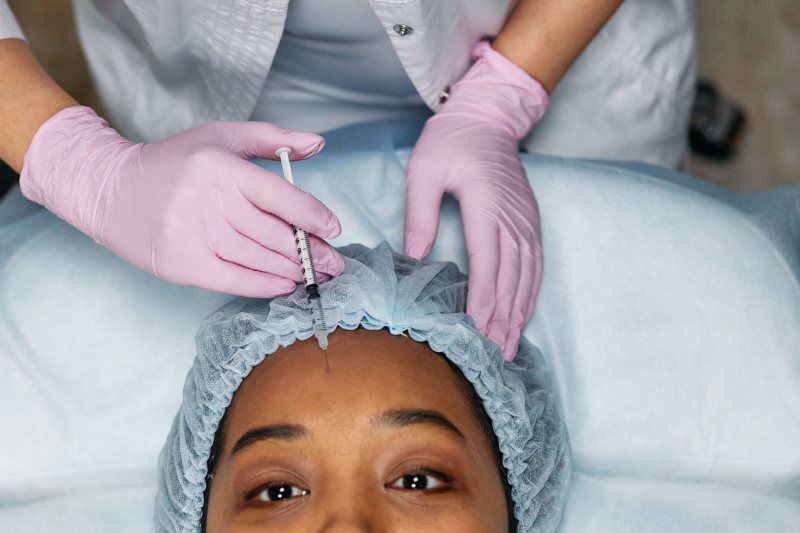
What Do Wrinkle Relaxers Treat?
Wrinkle relaxers are most commonly used to soften dynamic wrinkles—the lines that develop from repeated facial expressions over time. By temporarily relaxing targeted facial muscles, neurotoxins help smooth existing wrinkles while helping prevent deeper lines from forming.
Common treatment areas include:
- Forehead lines – Smooth horizontal lines caused by raising your eyebrows.
- Frown lines (11 lines) – Reduce the vertical lines between the eyebrows for a more relaxed appearance.
- Crow’s feet – Soften the fine lines that form around the outer corners of the eyes when smiling or squinting.
- Bunny lines – Minimize the small wrinkles that appear on the bridge of the nose.
- Lip lines – Smooth fine lines around the mouth for a more youthful look.
- Lip flip – Create the appearance of a fuller upper lip by relaxing the muscles around the mouth.
- Chin dimpling – Reduce the “orange peel” texture of the chin for a smoother appearance.
- Masseters – Relax enlarged jaw muscles to slim the lower face, relieve jaw tension, and help reduce teeth grinding and clenching (TMJ symptoms).
- Jawline slimming – Create a softer, more contoured facial profile by reducing the appearance of bulky jaw muscles.
- Neck bands – Improve the appearance of vertical neck bands for a smoother, more youthful neckline.
In addition to cosmetic benefits, neurotoxins may also help reduce excessive underarm sweating (hyperhidrosis) and can be used for certain medical conditions when appropriate. During your consultation, your provider will discuss your concerns and recommend the treatment plan that’s right for you.
How to Prepare for Your Appointment
To help you achieve the best possible results, please let your provider know if you:
-
Have received any neurotoxin treatment (Botox®, Dysport®, Daxxify®, or Xeomin®) within the past 3–4 months.
-
Are pregnant, breastfeeding, or planning to become pregnant.
-
Have a history of neuromuscular disorders or allergies to any ingredients in neurotoxin products.
-
Take blood thinners, aspirin, ibuprofen, fish oil, vitamin E, or certain herbal supplements, as these may increase the risk of bruising. Never stop a prescribed medication without first consulting the healthcare provider who prescribed it.
-
Have an active skin infection, rash, or irritation in the treatment area.
What to Expect
Before Your Treatment
Your appointment will begin with a consultation to discuss your goals, evaluate your facial anatomy, and determine which wrinkle relaxer is the best fit for you. Most treatments take just 10–20 minutes, making them an easy option to fit into your day.
During Your Treatment
Your provider will use a very fine needle to place small amounts of neurotoxin into the targeted muscles. Most patients describe the injections as a quick pinch with minimal discomfort. The number of injections will vary depending on the treatment areas and your desired results.
After Your Treatment
There is little to no downtime, and most patients return to normal activities immediately. To help ensure the best results, we recommend that you:
-
Avoid rubbing or massaging the treated areas for 24 hours.
-
Remain upright for at least 4 hours after treatment.
-
Avoid strenuous exercise, saunas, and excessive heat until the following day.
-
Follow any additional post-treatment instructions provided by your injector.
Results
Most patients begin noticing improvement within 2–5 days, with full results typically developing in 10–14 days. The longevity of your results depends on the product used and your individual response. Most wrinkle relaxers last 3–4 months, while some patients may enjoy results from Daxxify® for up to 6 months or longer.
Routine maintenance treatments help keep your results looking smooth, refreshed, and natural year-round.